"It's just such an obvious landmark, and it's an attraction that a lot of people can't resist."
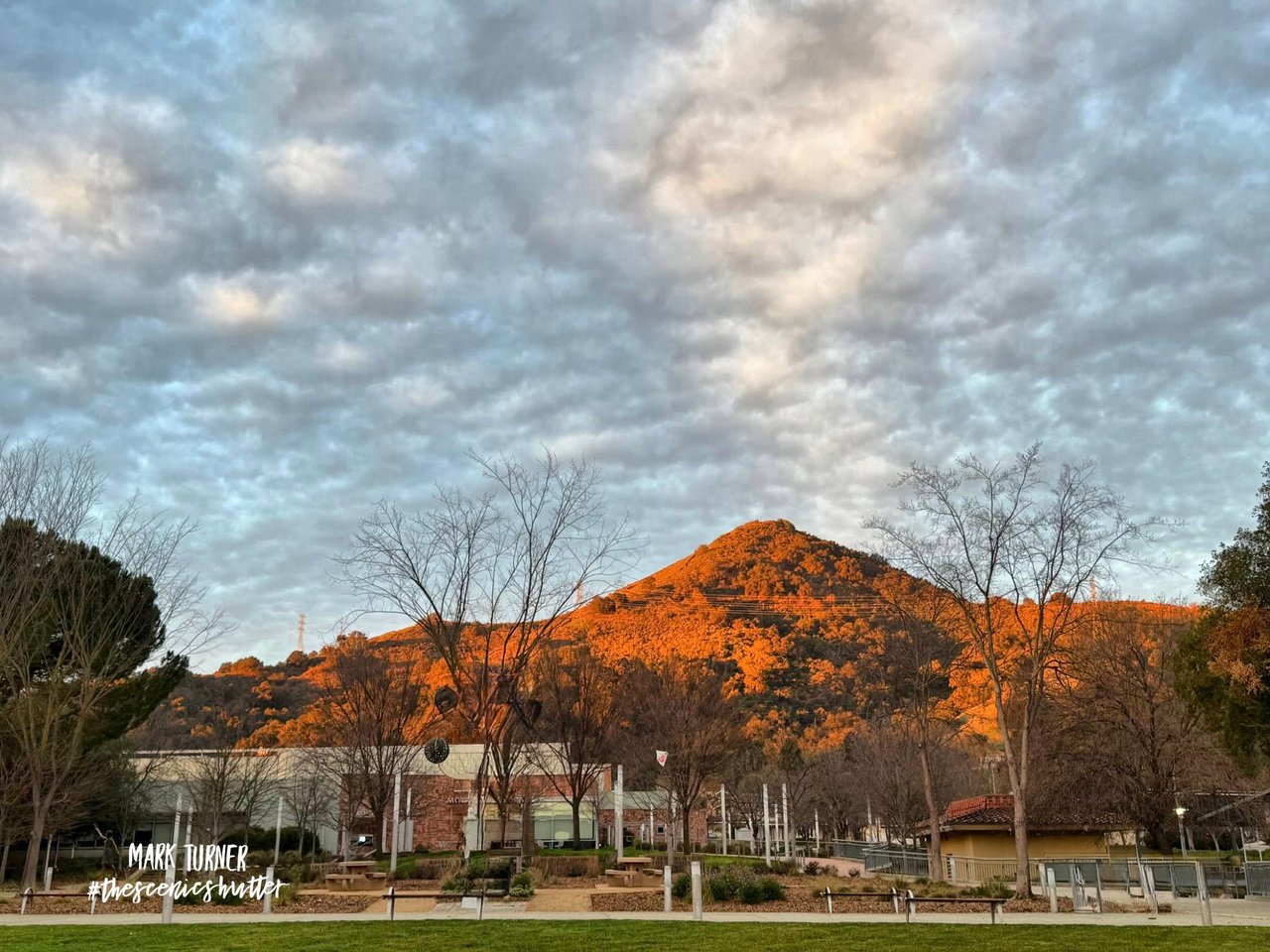
That's Ron Erskine, who has hiked El Toro for years and writes an outdoors column for the Morgan Hill Times, describing the mountain that forms the western backdrop of this whole town. Its silhouette is on the city logo. You see it from the Caltrain lot, from Monterey Road, from your own backyard if you live anywhere west of downtown. What most residents don't realize is that setting foot on most of it, and all the way to the actual summit, has been trespassing for well over a decade.
That's not an exaggeration for effect. It's the specific legal reality that shut down a 25-year hiking tradition in 2011, and it's the exact problem the city and the Santa Clara Valley Open Space Authority spent the next fourteen years trying to solve. Last fall, for the first time, they solved a piece of it. Not the whole mountain. A piece.
The Survey That Ended A 25-Year Tradition
For about a quarter century, the Morgan Hill Historical Society organized a springtime hike up El Toro, drawing hundreds of people who wanted the view and the story behind it, including the local legend that 19th-century writer Bret Harte named the hill after stumbling on two bulls fighting near the top. Everyone assumed the summit trail was on public land. Then a routine boundary line survey came back and moved the property line. The segment near the top wasn't public after all. It belonged to a private family.
The historical society canceled the hike that year rather than expose people, and itself, to a trespassing problem. It hasn't run since.
The family at the center of that boundary line is the Goods, who have owned roughly 70 acres at the very top of El Toro since the 1960s. A relative lives on the property. Over the years, the family has dealt with trespassers, vandals, thieves, and fires they attribute to unauthorized hikers cutting across their land to reach the summit. That's the context worth understanding before anyone gets excited about a "trail to the top." The top itself is still someone's home.
A Decade Of Plans That Went Nowhere
The city didn't drop the idea. In 2014, it adopted a formal Access Strategy identifying the intersection of DeWitt and Spring Avenues as the preferred entry point for a future legal trail. The city's El Toro Trail project page still describes the basic concept: an orange trail on the eastern face, built partly on city land and partly on land the Open Space Authority would need to acquire from willing sellers.
By 2019, staff had sketched a specific Phase One proposal: a 1.9-mile trail network with one trailhead at the end of Via Grande and a second near the parking lot of West Hills Community Church on DeWitt Avenue, connected by a route across the eastern slope. It went to a public workshop, and it did not go well. Via Grande residents showed up describing what informal hikers already did to their street: parked cars, litter, noise, foot traffic through a neighborhood where kids play outside. One resident put it bluntly, warning that legalizing the trail would only multiply everything they already disliked about it. City staff said afterward there was no defined schedule for when, or whether, the project would come back to the council.
For six years, that was where it sat.
What Actually Changed Between September And November Of 2025
Here's the part that's easy to miss if you only skim the headline that a trail is "finally happening." The breakthrough wasn't a grant, a lawsuit, or a council vote to force the issue. It was a single property owner granting an easement.
On September 3, 2025, the Morgan Hill City Council approved a project on the West Hills Community Church site that included a public trail easement, a right for a future trail to cross the church's land and connect to the Open Space Authority's 33-acre El Toro Preserve just south of it. Three weeks later, on September 25, the Authority's board voted to accept that easement and separately authorized staff to enter into a Memorandum of Understanding with the city.
The council approved that MOU on November 5, 2025.
"Creating an opportunity for free public access to El Toro has been Morgan Hill's vision for many years. With this agreement in place, the city and the authority are poised to begin planning a recreational opportunity that reflects the community's values."
That's Mayor Mark Turner, in the announcement that followed. The Open Space Authority's general manager, Andrea Mackenzie, added that the mountain "has inspired generations of residents, artists and visitors." Mackenzie has represented the Authority's side of this project since at least the 2015 Access Strategy approval, which gives some sense of how long this file has been open before finally moving.
Notice which street the MOU points to. It's DeWitt Avenue, through the church's land, not Via Grande, the residential street where homeowners spent that 2019 workshop describing exactly the impacts they didn't want repeated. The easement solved the access problem the city had been stuck on for a decade, and it happened to route around the neighborhood that had organized against it.
The Part The Announcements Don't Emphasize
None of this reaches the top of El Toro. The MOU commits the city and the Authority to jointly plan trail design, access points, and long-term stewardship on land they control or now have an easement across. The Good family's 70 acres at the summit are not part of that agreement. Whatever trail emerges from this MOU will very likely traverse the eastern face and connect to the Authority's preserve, offering the sweeping views El Toro is known for, without necessarily delivering hikers to the literal peak.
Here's a plain comparison of where things stand against what's been proposed:
| Informal route today | Planned trail under the MOU | |
|---|---|---|
| Legal status | Crossing private land without permission | Public access via secured easement |
| Primary entry | Via Grande dead end | DeWitt Avenue, through the church's lot |
| Trail condition | Steep, no switchbacks, documented erosion | Designed to city and Authority trail standards |
| Reaches the true summit | Only by trespassing further onto private land | Not addressed in the current agreement |
| Who maintains it | No one | City of Morgan Hill and the Open Space Authority jointly |
The city's own press materials are careful on this point too: public engagement and environmental review are described as the next phase, additional property rights still need to be secured just to locate a trailhead staging area, and no opening date has been set. Given that the 2014 strategy took eleven years to produce a signed easement, it's reasonable to expect this next stretch to take real time as well.
People Are Already Doing This Illegally, In Numbers
One detail from that 2019 workshop is worth sitting with. A city-commissioned survey found that on a single Saturday, roughly 70 hikers set out on the existing, unauthorized trail up El Toro between 8 a.m. and 6 p.m., most of them repeat local hikers who'd done it before. For comparison, the Open Space Authority's own staff estimated that Rancho Cañada del Oro, a comparable formal preserve in south San Jose, sees about 27 hikers on a typical weekday and 54 on a weekend day, combined less than what El Toro drew on one unofficial Saturday. The demand for this mountain has never been the question. The property lines were.
The Mountain Shows Up On Your Receipts Now, Too
There's a smaller, lighter thread in all this. This year's Morgan Hill Chamber of Commerce named the MH Wine Trolley, operating as El Toro Tours, its 2026 Small Business of the Year. It was launched in 2024 by longtime friends Christina Perez and Heather Gallegos. The business borrowed the mountain's name for a reason that needs no explaining if you've lived here: El Toro isn't just a hiking dispute or a line in an old legend about Bret Harte and two fighting bulls. It's the thing everyone in this town already orients by, whether they're headed up Monterey Road or booking a wine tour downtown.
Whether the legal trail opens in one year or five, the mountain isn't going anywhere, and neither is the argument over how you're allowed to reach it. If you're the kind of person who tracks something like this because you already live in its shadow, you already understand why 70 people showed up on an illegal trail one Saturday and why it took a church parking lot to move the needle after a decade of stalled plans.
If you're thinking through what it actually means to live near a piece of land like this, whether that's El Toro's foothills or another corner of South County, Sold By Team Robinson knows this ground well enough to walk you through it. Reach out for a free home valuation, or just to talk through what a place like this is really like to call home.