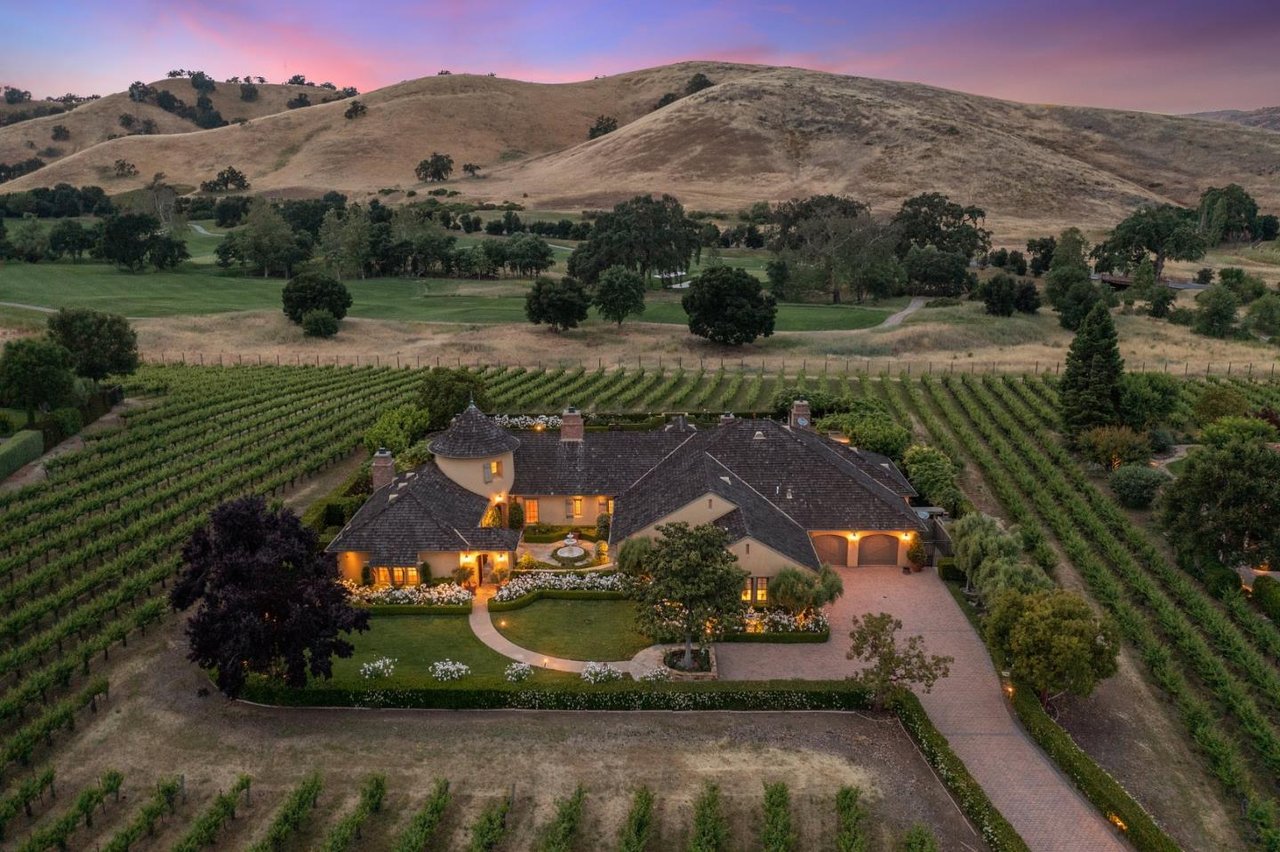
A buyer under contract on a home west of downtown Gilroy recently got two separate agricultural disclosure documents in the same disclosure package. Not two copies of the same form. Two different forms, built off two different legal tests, asking two different questions about the same property.
Most buyers assume any paperwork mentioning "farmland" is redundant boilerplate that every California seller signs. In Gilroy, that assumption costs you the one detail that actually matters: the state's farmland disclosure and the city's own agricultural disclosure measure different things, and a property can trigger one without the other. Knowing which applies to your specific address, and why, tells you what to actually ask before you remove contingencies. Treating both as the same signature line does not.
The state test is a map. The city test is a nose.
California has required a statewide agricultural disclosure since January 1, 2009, when Civil Code Section 1103.4 took effect under AB 2881. The trigger is geographic: is the property within one mile of land the state's Important Farmland Map classifies as Prime Farmland, Farmland of Statewide Importance, Unique Farmland, Farmland of Local Importance, or Grazing Land. It's a distance-and-classification test you can run against a public map, administered through the California Department of Conservation's Farmland Mapping and Monitoring Program.
Gilroy layered its own ordinance on top of that in 1994, and it asks a different question entirely. The city's disclosure statement, codified in Chapter 3A of Gilroy's municipal code under Ordinance 93-22, doesn't run a fixed radius against a map. It asks whether the property sits in close proximity to an actual, operating commercial agricultural activity or processing facility, including the noise, odors, dust, machinery, manure storage, and chemical application that come with it, and it runs on any hour of the day.
That difference matters because a mile is an arbitrary line and a working farm operation isn't. A parcel a mile and a quarter from mapped Prime Farmland clears the state test cleanly, while still sitting close enough to an active processing operation to catch dust, noise, or odor on the right afternoon. Gilroy's ordinance exists to catch that gap.
The garlic plant is the clearest example of why proximity beats a radius
Gilroy is known as the Garlic Capital of the World, and the smell of garlic ripening in the field or being processed nearby is strong enough on a warm morning that it's been reported carrying well beyond the town itself. A one-mile radius test built around a static farmland map was never going to reliably capture an odor that travels that far on the right wind. A proximity-based local disclosure, tied to the actual operation rather than a fixed distance, is a more honest way to warn a buyer about what they're actually going to smell, hear, or see from that specific address.
This is the interpretive point worth sitting with: the two disclosures aren't duplicating each other, they're covering the blind spot the other one leaves. The state's map-based test is easy to check but can miss real, nearby operations that fall just outside the radius or aren't classified in the mapped categories. The city's proximity-based test catches those operations but depends on the seller and agent actually knowing what's next door.
Both disclosures exist because of the same underlying law
Underneath both forms sits California's Right to Farm law, added to the Civil Code in 1981 through AB 585 as Section 3482.5. It shields a lawfully operating agricultural business from nuisance lawsuits over noise, odor, dust, or similar conditions, provided the operation was not already a nuisance when it started. In plain terms: if you buy next to a working farm or processing plant and later decide the noise or smell bothers you, the law generally sides with the farm, not with your discomfort.
Both disclosures are the paper trail that makes that defense airtight for the agricultural operation and gives the buyer fair warning before they sign anything. Gilroy's own version says as much directly in its language: buyers may want to obtain professional advice or inspections, and the statement itself is not a warranty and not a substitute for those inspections. The disclosure tells you the risk exists. It doesn't manage the risk for you.
Where this friction is live right now
This isn't an abstract compliance exercise. In February 2025, preliminary permits were filed for a large subdivision at 8930 Watsonville Road, on rural agricultural land west of Gilroy, with Swenson Builders applying through Green Valley Corporation. The filing drew organized pushback from area residents over traffic on Watsonville Road and the loss of working farmland, the kind of conversation that plays out repeatedly at the edges of Gilroy's growth boundary.
That boundary isn't informal. Gilroy voters approved an Urban Growth Boundary in 2016 through Measure H, a roughly two-thirds vote that drew a hard line around where the city can expand, according to Gilroy Growing Smarter, the local land-use group that led the campaign. New subdivisions built at that line sit, almost by definition, next to whatever agricultural use was there before the line was drawn. That's precisely the geography where a buyer is most likely to see both disclosures stacked in the same file: close enough to mapped farmland to trigger the state test, and close enough to an actual working operation to trigger Gilroy's.
Two disclosures, side by side
| State disclosure | Gilroy city disclosure | |
|---|---|---|
| Legal basis | Civil Code 1103.4 (AB 2881) | Municipal Code Chapter 3A (Ordinance 93-22) |
| Effective since | January 1, 2009 | January 19, 1994 |
| Trigger | Within one mile of land on the Important Farmland Map | Close proximity to an actual commercial agricultural or processing operation |
| What it flags | Farmland classification by category | Noise, odor, dust, machinery, spraying, storage |
| Is it a warranty | No | No, explicitly stated on the form |
What to ask before you remove contingencies
If you're evaluating a Gilroy property anywhere near the growth boundary or an active agricultural operation, a few questions get you past the signature line and into what actually matters:
- Which disclosure did I receive, the state farmland form, the city form, or both, and does the listing agent know why
- Is the neighboring land actively farmed today, or only classified as farmland on a map that may not reflect current use
- Is there a processing facility, dairy, or similar operation nearby, not just open fields, since that's what the city's ordinance is built to catch
- How long has the operation been running, since an established, lawfully operating farm is generally shielded from nuisance claims under the Right to Farm law
- Would a visit at a different time of day or season change my read on noise, odor, or dust
None of these questions require a lawyer. They require asking the seller's agent to be specific instead of accepting a signed form as the end of the conversation.
Frequently asked questions
Does every Gilroy home get both disclosures? No. A property has to independently trigger each test. Some homes clear the state's one-mile map test but sit close enough to an active operation to trigger the city's proximity test, and occasionally the reverse.
Can I sue if the smell or noise turns out to be worse than expected? Generally not, if the agricultural operation was lawfully established and was not already a nuisance when it began operating, under the state's Right to Farm protections. The disclosures exist specifically to put buyers on notice before that becomes an issue.
Is the disclosure a guarantee that the seller identified every nearby agricultural use? No. Both forms state plainly that they aren't a warranty and aren't a substitute for the buyer's own inspections and professional advice.
Does this apply outside city limits, like in unincorporated Santa Clara County near Gilroy? The Chapter 3A city ordinance applies within Gilroy's city limits. The statewide Civil Code 1103.4 disclosure applies wherever the one-mile farmland-map trigger is met, regardless of city boundaries.
Reading disclosures accurately is a small part of a much larger job: knowing which questions to ask before a contingency deadline passes. That's the kind of groundwork Sold By Team Robinson walks through with every South County buyer and seller, from the first showing through closing. If you're evaluating a property near Gilroy's agricultural edges, get a free home valuation and a straight answer on what your specific disclosures actually mean.